Monday, November 20, 2017

Book Review of Whisper: How to Hear the Voice of God, by Mark Batterson

Does God still speak?

This is a question that we as Christians often ask. We know that God spoke audibly to people like Samuel, Noah, Elijah, and other Bible saints and prophets. But does He still speak to us today?

In his book Whisper, Mark Batterson would argue that He does speak. As humans, many have heard and outlined that we have 5 love languages. Batterson finds 7 different love languages of communication that God has with His people. These are Scripture, Desires, Doors, Dreams, People, Promptings, and Pain.

I give this book a 4.5 rating out of 5. From the eye-catching artwork on the front cover to the revealing title and subtitle, all the way through the deep content within, this book is a very good look at how we as Christians can hear God's voice on a daily basis. We just have to be listening.

BIBLIOGRAPHY OF THIS BOOK:
Batterson, Mark. Whisper: How to Hear the Voice of God. Colorado Springs, CO: Multnomah, 2017.

DISCLOSURE OF MATERIAL: I received a complimentary copy of this book through the Blogging for Books book review program, which requires an honest, though not necessarily positive review. The opinions I have expressed are my own. 

Thursday, November 16, 2017

Isaiah: The Prince of Peace

Isaiah 9:6
6 For unto us a child is born, unto us a son is given: and the government shall be upon his shoulder: and his name shall be called Wonderful, Counsellor, The mighty God, The everlasting Father, The Prince of Peace.

One of the many Messianic prophecies that we find in the Old Testament, this is one of the few that lists names for Christ. All of the names here view Christ as a ruler. He is the wonderful counselor, bringing about righteous judgment on this earth and in heaven. He is the mighty God,  full of wisdom and strength as our virtuous ruler. He is the everlasting Father, continually acting in that role as Father for all who will come to Him in every generation.

And He is the Prince of Peace.

It is fitting that this verse is in Isaiah. Out of all the books in the Bible, only Leviticus mentions the word peace more, with most of the references there being toward peace offerings. Isaiah prophesied at a time when Israel was searching for peace, and that time has continued even until now. Isaiah, like many others, held to the belief that the reign of their Messiah would bring peace to this earth, rather than bringing war to defeat all of Israel's enemies.

One of my favorite verses that shows this desire and knowledge that God would bring peace to and for Israel and to all who love God is Isaiah 26:3. This passage is part of a song that Isaiah wrote for Judah. Here, he writes "Thou wilt keep him in perfect peace, whose mind is stayed on Thee: because he trusteth in Thee." The words perfect peace there in the original Hebrew are actually the same word repeated twice: shalom shalom.

The word shalom in Hebrew is often and rightly interpreted as peace. It is the only word that we have that comes close to the application that the Hebrew language brings. While we view peace as calm, comfort, or tranquility, Hebrew shalom goes deeper. Shalom is a sense of completeness or wholeness that gives one the desire to give back. And Isaiah says that God will give a double portion of completeness to those people who keep their mind focused on Him.


One day Christ will come again and truly bring shalom shalom to the earth. Until then, let us keep our minds focused on Him, that He might bring us His shalom, His completeness to Him. And when He brings it to us, let us give our lives back to Him in reverence and in service.


Tuesday, November 14, 2017

Church Hunters -- Part 4


In our final study of what to consider when choosing a church, we are going to turn down a completely different road. To this point, we have looked at the church itself--the commissioned, continuing, and convinced church. Now we will look at a singular person in the church: the called pastor. The pastor is a very important part of choosing any church. Often, if one wants a good picture of what the church is, he can look to the pastor and see a picture of what the church will eventually become. What should one look for in a pastor?


I Timothy 3 and Titus 1 provide us with the characteristics of a bishop or elder (other Bible words for pastor). We will be looking at the pastoral characteristics found in I Timothy 3:1-7.

1. The pastor is called to a good desire -- His reputation before God (I Tim. 3:1)
1 This is a true saying, If a man desire the office of a bishop, he desireth a good work.

The pastor must have a desire to be in this position. Without that desire, he will soon lose his passion for the work of God. However, this desire must be in the right places. He must desire the position to serve others, to preach the Word of God, and to lead the flock. His desire must not be material gain or leading others astray.

QUESTIONS:
1. Does my pastor have a desire to be in the pastorate?
2. Is my pastor's desire based in scriptural things and not selfish things?

2. The pastor is called to a good character -- His reputation before the church (I Tim. 3:2-3, 6)
2 A bishop then must be blameless, the husband of one wife, vigilant, sober, of good behaviour, given to hospitality, apt to teach; 
3 Not given to wine, no striker, not greedy of filthy lucre; but patient, not a brawler, not covetous;
6 Not a novice, lest being lifted up with pride he fall into the condemnation of the devil.

The pastor's reputation in the church must be a good one. He must have a character that reflects his position. An outline of the above characteristics would be this:

Unquestioned gender
The unquestioned gender is the fact that he is a he. This is crucial to a Christian's beliefs. It is God-ordained that pastors be men. This is not because women are not supposed to study the Bible or be leaders. Rather it is because God wants the church to be a picture of how the home is structured. His structure from the beginning is man leading the home. The church is a picture of the marriage and family relationships.

Unquestioned behavior
The pastor's behavior should be above reproach. Accusations should not be able to take hold in his life. He should always be aware of any dangers that could come into his life, his family, or his church. His behavior should be characterized by the purpose that God has given him. He should be organized or disciplined in his actions.

Unquestioned love
His love for the people in his church should also be unquestioned. He should be hospitable, welcoming people and helping with needs whenever he can. He should be a teacher, lovingly showing his congregation how to follow God's Word.

Unquestioned actions
His actions should be God-honoring. He shouldn't be a drunk or a bully. He shouldn't be greedy or constantly trying to get more stuff that he doesn’t need. He should be patient. He shouldn't be quick to argue.

QUESTIONS:
1. Is he a man?
2. Is his behavior unquestionably godly?
3. Does he have a love for the church?
4. Do his actions reflect that he is following God?

3. The pastor is called to a good home -- His family's reputation (I Tim. 3:4-5)
4 One that ruleth well his own house, having his children in subjection with all gravity; 
5 (For if a man know not how to rule his own house, how shall he take care of the church of God?)

Our pastor should be one that takes care of his family. He should be in charge in his house- the authority that his family looks to for leadership. His wife should be submitted to him Biblically. His children should obey and acknowledge his authority. If he is not able to be in authority over his own house, then he would not be able to be a good authority in God's house. 

QUESTIONS:
1. What is his wife's attitude toward him? Does she willingly submit to his leadership?
2. Do his children acknowledge his authority and obey him? Or are they rebelling constantly and not bringing honor to God?

4. The pastor is called to a good testimony -- His reputation before the community (I Tim. 3:7)
7 Moreover he must have a good report of them which are without; lest he fall into reproach and the snare of the devil.

The pastor should have a relationship of respect with the community. He should be known as a man of character among all non-believers. If he does not have a good testimony in the community, how can he reach out to the community? How could they see the love of Christ through the church? The world needs to be able to respect the morality of the pastor, even if they don't respect his beliefs. 

QUESTIONS:
1. Does his testimony in the community reflect well on God?
2. Does his testimony in the community allow us to properly reach out to the community?
3. Will our church be given a bad name because of his leadership?

I hope that you have enjoyed this series on the characteristics of a Biblical church. God desires that all who have believed in Jesus Christ follow Him and the church is a large part of that following. Following through the commissioned church, the continuing church, the convinced church, and a called pastor are essentials for every Christian to have. Again, I offer a word of caution when asking these questions: If a few of the underlying questions do not add up to exactly where we want them to be, it does not mean that God does not want us in that church. Rather He wants us to be leaders and help that church grow. If however, the church does not exhibit the major qualifications that our presented in scripture, we may want to consider going elsewhere. Ultimately, we must let God lead us to where He wants us. 

1. Photo credits: www.godtube.com/watch/?v=YKKWGPNX

Tuesday, November 7, 2017

Church Hunters -- Part 3


We have looked before at the commissioned church and the continuing church as characteristics to look for when choosing a church to attend. Now we will look at the convinced church. In Acts 4, the church was preaching the gospel of Christ. They were following the commission and continuing in the practices which they knew were right. Now they were experiencing persecution. It was at this time that the church needed to be convinced. Now what did they need to be convinced about, and what do our churches, in turn, need to be convinced about?

1. They were convinced of their Messiah--Acts 4:8-10

8 Then Peter, filled with the Holy Ghost, said unto them, Ye rulers of the people, and elders of Israel,
9 If we this day be examined of the good deed done to the impotent man, by what means he is made whole;
10 Be it known unto you all, and to all the people of Israel, that by the name of Jesus Christ of Nazareth, whom ye crucified, whom God raised from the dead, even by him doth this man stand here before you whole.

Though I am not a Jew looking for a Messiah, to these apostles, that's who Jesus was. He was promised from the beginning of time. He was the one who fulfilled all the prophecies given in the Old Testament. These disciples were convinced that the man they were following was the one who they needed to follow.

QUESTIONS:
1. Is this church one-hundred percent convinced in Jesus Christ being the Messiah, the Son of God?
2. Would this church and pastor ever consider turning to another Messiah as its Lord?

2. They were convinced of their Message--Acts 4:18-20

18 And they called them, and commanded them not to speak at all nor teach in the name of Jesus.
19 But Peter and John answered and said unto them, Whether it be right in the sight of God to hearken unto you more than unto God, judge ye.
20 For we cannot but speak the things which we have seen and heard.

Peter and John, when brought before the religious leaders had a predicament. They had been threatened and told to never preach in the name of Jesus Christ. But Peter and John made a decision. They made sure in their hearts that they would not waver, no matter who told them to stop preaching. They were convinced that they should obey God more than they should obey man. They were also convinced that they needed to tell all of what they had seen Christ to and heard Christ teach. They were convinced that their message needed to go forward. What about our church?

QUESTIONS:
1. Has this church changed the message that it teaches from God's Word?
2. Would this church and pastor ever consider changing the message that it teaches?

3. They were convinced of their Methods--Acts 4:23-24, 31-35

23 And being let go, they went to their own company, and reported all that the chief priests and elders had said unto them.
24 And when they heard that, they lifted up their voice to God with one accord.
31 And when they had prayed, the place was shaken where they were assembled together; and they were all filled with the Holy Ghost, and they spake the word of God with boldness.
32 And the multitude of them that believed were of one heart and of one soul: neither said any of them that ought of the things which he possessed was his own; but they had all things common.
33 And with great power gave the apostles witness of the resurrection of the Lord Jesus: and great grace was upon them all.
34 Neither was there any among them that lacked: for as many as were possessors of lands or houses sold them, and brought the prices of the things that were sold,
35 And laid them down at the apostles' feet: and distribution was made unto every man according as he had need.

When Peter and John were released by the religious leaders and came back to the church, the two men told the church everything that had happened. Notice what they did after that in verse 24--"they lifted up their voice to God with one accord"--and in verse 31--"and when they had prayed." They kept the methods that they had used before right then and there after hearing the threats of the religious leaders. Then in verses 32-35, the continued the other methods that they had done before. They were convinced that the methods that they had used before and had worked still worked. Where does that leave the church today?

QUESTIONS:
1. Do I agree with the methods this church uses?
2. Will this church keep strong the core methods found in Acts 2:42-47?
3. Will this church waver in its methods when challenged by the world or will it stay strong and as separate as it needs to be?

We have now finished part 3 of this series of characteristics to consider in choosing a church. We have one more part remaining, which looks at a different part of the church than we have looked at to this point.

1. Photo credits: www.godtube.com/watch/?v=YKKWGPNX

Book Review: Know Who You Are, Live Like It Matters by Tim Tebow

To be honest, when I requested this book, I didn't know what I was getting. I simply saw the name and the picture on the cover and knew that I wanted to read it. I have been a fan of Tim Tebow since he was a freshman at the University of Florida in 2006. Every time I have had the opportunity to read things he has written, I have taken that opportunity. But I hadn't read the subtitle to this book-- Know Who You Are, Live Like it Matters: A Homeschooler's Guide to Discovering Your True Identity. I was not homeschooled. I was in a Christian school from K4-12th grade and then went on to live in the dorms of a Christian college. But even still, I can learn from Tebow's insights that he has written into this book.

This Bible Study is split into 4 parts with 9 lessons in each part. Each lesson is short and simple but has a challenge to it. Tebow, along with co-author A.J. Gregory, then gives discussion questions to be answered. He encourages those who are doing the study, both the kids and their parents helping, to take about 30 minutes to journal their answers to these questions, taking time to improve their writing, while also deepening their walk with God.

First, Tebow focuses on our identity in Christ in the section "Who Are You?" He opens this section by saying, "The world does not define you."(5) His purpose for this section is to help individuals realize that identity cannot be found in things, relationships, or even in themselves. Identity is to be found in Christ.

Second, Tebow focuses on how we go through difficulties in "Don't Sweat It; God's Got It." He stresses the importance of keeping our focus in trials on who we have our identity in. We can have our identity secure through easy times, but it is much more difficult to do this during difficulties. But through Christ, we can overcome.

Third, Tebow focuses on our relationships with others in "Others Matter." While our identity cannot be found in our relationships with others, these relationships still matter. As our identity in Christ grows, so should our relationships and how we interact with others.

Finally, Tebow focuses on our eternal impact in "Live Bigger." Our purpose on this earth is not just to be born, live, and die. God has placed us here to bring honor and glory to Him, as well as bring others to Him. God wants to use His people for His purposes. We should have the desire and the drive to allow Him to use us.

Tebow does an excellent job relating specifically to the student. While I wasn't homeschooled, as I mentioned before, I can almost get a glimpse into a homeschooler's life. It is a unique perspective, one that is so often overlooked. Tebow did very well in conveying that, and I would highly recommend this devotional book as a part of one's curriculum.

RATING: 4.5 out of 5

Where to Purchase: https://waterbrookmultnomah.com/books/548256/know-who-you-are-live-like-it-matters-by-tim-tebow-with-a-j-gregory/

Bibliography:
Tebow, Tim. Know Who You Are, Live Like It Matters: A Homeschooler's Guide to Discovering Your True Identity. Colorado Springs, CO: Waterbrook, 2017

FTC Disclosure:

I received a complimentary copy of this book through the "Blogging for Books" book review program, which requires an honest, though not necessarily positive review. The opinions I have expressed are my own

Friday, November 3, 2017

Church Hunters -- Part 2


Last time, we looked at the commissioned church. Today, we are looking at the continuing church. So what is a continuing church? It is a church that is continuing in what Christ left us on earth to do. While the commission is the essence of our ministry, the continuing is the environment that God has called us to create in the church. Let's look at Acts 2:42-47--

42 And they continued steadfastly in the apostles' doctrine and fellowship, and in breaking of bread, and in prayers.
43 And fear came upon every soul: and many wonders and signs were done by the apostles.
44 And all that believed were together, and had all things common;
45 And sold their possessions and goods, and parted them to all men, as every man had need.
46 And they, continuing daily with one accord in the temple, and breaking bread from house to house, did eat their meat with gladness and singleness of heart,
47 Praising God, and having favor with all the people. And the Lord added to the church daily such as should be saved.


The church here continued in several different things here. And not only did they continue, they continued steadfastly. Steadfastly there means faithfully or regularly. They did not fail to make use of these practices and create a godly environment in the church I would like to point out six of these practices, and then show the result of those practices.

1. They continued in teaching -- "doctrine" (v. 42)
The early church was one that heard the words of the apostles. These men had heard directly from Jesus Christ Himself. They'd followed Him for three and a half years. And what they had been taught, they taught to the people. Look where we are today. We have the scriptures, from Genesis all the way to Revelation. We have the very Words of God at our fingertips. As such, our churches should be teaching the doctrines that are found within. 

QUESTIONS:
1. Is my church teaching doctrine that lines up with scripture?
2. Is my church continuing to teach in different settings and formats?
3. Is my church exalting the Bible as the authority for all doctrine, rather than the men who speak in the pulpit?

2. They continued in fellowship -- "fellowship (v. 42); with one accord (v. 46)"
The early church enjoyed each other's company. They were friends. They didn’t just walk in, sing a couple songs, pray, hear some teaching, and leave. They formed relationships with the other members of the congregation. They learned to love these people. Many people in churches today seem to hold to the "come, sit, stand, leave" philosophy of church attendance. But God wants us to continue in fellowshipping with one another, in forming relationships. 

QUESTIONS:
1. Is my church a friendly church?
2. Does the pastor encourage us to fellowship with one another?
3. Do we have opportunities for fellowship (meals, small groups, etc.)?

3. They continued in discipleship -- "breaking bread" (vv. 42, 46)
This practice is a mix of the previous two-- teaching in principle, fellowship in practice. When the early church created relationships, they then were able to teach others more closely. They were breaking bread together, eating meals with smaller groups of people.  This is the practice. The principle comes in the word breaking. When they would break the bread, they would pass it around to all who were at the table. They would spread the bread around so that all could have some, and in the process also spread knowledge around. Where do this principle and this practice leave the church today? In practice, our relationships should deepen to the point where we can implement the principle of discipleship in our everyday living. 

QUESTIONS:
1. Does the church provide ample opportunity for me to learn from other members?
2. Does the church provide ample opportunity for me to teach other members?
3. Is discipleship encouraged along with outreach?

4. They continued in prayers -- "in prayers" (v. 42)
The early church knew the power that prayer had. The apostles had seen The power of prayer in the life of Jesus Christ and had learned how to pray from Him. These prayers filled the church with power. They prayed for God to work in their church, in the lives of other church members, and in their own personal lives. What should this mean for us in our churches? We should be using prayer to fill our church as a whole and the people within the church with power. 

QUESTIONS:
1. Does my church encourage us to pray for one another by providing prayer requests and praises in the service and/or on paper?
2. Does my church provide opportunities to pray for one another?

5. They continued in giving -- "parted them to all men (v. 45); from house to house (v. 46)"
Giving is one of the hardest things to do. As people, we naturally desire for our own welfare to grow through receiving. But here in Acts, the church was naturally giving. Not only did they give, but they gave sacrificially. They would sell off a piece of property and give all the proceeds to the church. The church could then spread that money to people who were in need. As a church now, we should be giving for several things that are even mentioned in the Bible. We should be giving 1) to support the local church ministry and the pastor (I Tim. 5:17-18), 2) to provide for the needs of others (Acts 2:45), and 3) to support the work of missionaries (II Cor. 8:1-5). 

QUESTIONS:
1. Am I going to have an opportunity to give to support the church and the pastor?
2. Am I going to have an opportunity to give to support others who are in the church and in the community?
3. Am I going to have an opportunity to give to support missionaries around the world?

6. They continued in worship -- "Praising God" (v. 47)
Worship is the culmination of all the above practices. Worship is not just a style of music, but rather an environment, a culture, and a lifestyle that glorifies God. When the early church did all of the above, they also continued in worshipping God. God was honored. God was glorified.

QUESTIONS:
1. Do the actions of this church exemplify worship of God?
2. Is the church's atmosphere and environment one that places a priority on worship?
3. Am I able to glorify God in my actions in this ministry?

Now, what was the result of this atmosphere? What did God do for this church? Look at the end of verse 47: "And the Lord added to the church daily such as should be saved." When this church created an environment surrounded around God-honoring practices, God brought in the souls who would be saved and would join the church. The church grew as a result of honoring God. They grew in numbers and in spiritual matters. This church is a great example for us to follow. 

1. Photo credits: www.godtube.com/watch/?v=YKKWGPNX

Wednesday, October 25, 2017

Church Hunters -- Part 1


In the last few weeks, I've reached out to people at my college asking them what they would like to learn about from the Bible. One of the topics requested was "Characteristics to look for when choosing a church." In response to this, I have written a 4 part series from the Bible about general characteristics that each Christian should look for in choosing a church. Often one may just attend a church for a few weeks, decide if we like it, and either stay or move on. Growing up as a pastor's grandkid I saw this cycle happen all the time. But what does the Bible say about where we attend church? The 4 characteristics we will be looking at are 1) The Commissioned Church (Acts 1:8), 2) The Continuing Church (Acts 2:42-47), 3) The Convinced Church (Acts 4), and 4) The Called Pastor (I Timothy 3).

What is the commissioned church? It is the church that follows the command of Christ in Acts 1:8:

8 But ye shall receive power, after that the Holy Ghost is come upon you: and ye shall be witnesses unto me both in Jerusalem, and in all Judaea, and in Samaria, and unto the uttermost part of the earth.

The church that follows this commission is one that the Christian should desire to attend. This church is a church that has received power from God and the Holy Ghost, meaning that they are indeed a Bible-believing, saved congregation. The members have accepted Christ's sacrifice and have the Holy Ghost dwelling inside them. That is a basic qualification.

But this church is not only one that is saved, but it also is witnessing--it is indeed following the commission of Christ. This commission is to 4 different groups of people.

1. The commission is to the community. "In Jerusalem"
Jerusalem was the city where the disciples were located. They were first to go to the people right where they were located. This is a basic mission for any church. If a church is not going to attempt to reach their local community, it is not going to grow, let alone thrive in the community.

QUESTIONS:
1. How is this church reaching out to the local community?
2. What is this church's reputation with the community?

2. The commission is to the surrounding area. "In all Judaea"
Judaea was the province that Jerusalem was located in. For we who are in the states, that would be like our state. For my home, it is Pennsylvania. For my school, it is Florida. This Judaea should be reached by the church. The local church should have fellowship with and a good reputation with other churches in their area. 

QUESTIONS:
1. Do this church have fellowship with other local, like-minded churches?
2. Do this church have a good reputation with other local, like-minded churches?

3.  The commission is to the outcasts. "In Samaria"
Regionally, Samaria could be considered the surrounding area to Judaea and Jerusalem. It's only one region over. But the Samaritans were also the outcasts of the land of Palestine in this time period. They were half-breeds, mixed Jews and Assyrians. They worshipped differently and in a different place than their half-brothers. These two countries did not get along. But Jesus went to them. He commanded His disciples to go to them. Jesus went to all the outcasts of society--the sinners, the tax collectors, the harlots, the lepers.

QUESTIONS:
1. Is this church willing to go to the outcasts of society?
2. When this church encounters outcasts, does it treat them with kindness?

4. The commission is to the world. "The uttermost part of the earth"
This is fairly simple. The same application that applied then applies today--everyone everywhere deserves to hear about Christ. Other verses in scripture say "all the world," "all nations," and "to every nation, and kindred, and tongue, and people." 

QUESTIONS:
1. What is this church's attitude toward global missions?
2. Are we encouraged to give more to missions?
3. Are we encouraged to potentially go as missionaries, on short-term, long-term, or lifetime missions trips?
4. Are we supporting as many missionaries as we possibly can?

I must clarify before we move forward in this series: negative answers to one or two of the above questions do not necessarily mean that God does not want you in that church. It may be that the desire and vision is there, but the means are not. What it does mean is that these should be questions to take up with your pastor and volunteer to lead in answering those questions in the church if God is leading you to do so.

The church being commissioned--being willing to go into the community, to the surrounding area, to the outcasts, and to the world--is a must have for every Christian. The commission is the essence of what God has left us here on earth to do. If our church is not following this commission, where does that leave us as an individual? I must also issue this encouragement: do what you can to fulfill the commission in your own life. When you are doing so, God will lead you in finding a church that is fulfilling the commission as well.

1. Photo credits: www.godtube.com/watch/?v=YKKWGPNX
2. Video credits: https://www.facebook.com/johnbcrist/videos/1026079677527111/

Saturday, October 14, 2017

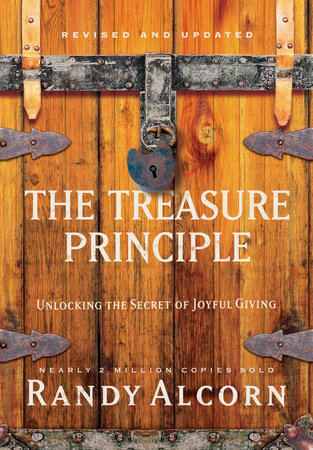
Book Review: The Treasure Principle

As we live our lives, we are often told "whoever dies with the most toys wins." This world is constantly telling us to acquire more possessions. But what did Jesus tell us to do? In The Treasure Principle, Randy Alcorn explains this very principle which he says "unlocks the secret to joyful giving."

Alcorn bases this principle on two passages in Matthew: Matthew 13:44, from the Kingdom Parables, and Matthew 6:19-21, from the Sermon on the Mount.

Matthew 13:44 -- "Again, the kingdom of heaven is like unto treasure hid in a field; the which when a man hath found, he hideth, and for joy thereof goeth and selleth all that he hath, and buyeth that field."

Matthew 6:19-21 -- "Lay not up for yourselves treasures upon earth, where moth and rust doth corrupt, and where thieves break through and steal: But lay up for yourselves treasures in heaven, where neither moth nor rust doth corrupt, and where thieves do not break through nor steal: For where your treasure is, there will your heart be also."

This man in Matthew 13 sold all that he had- got rid of everything to obtain a treasure that is beyond any measure. Mr. Alcorn sees this story and advocates that we give to others, and by doing so store up our treasures in Heaven.

In order to unlock this secret of joyful giving, Alcorn lists 6 keys.
  1. God owns everything. I am His money manager (ch. 3).
  2. My heart always goes where I put God's money (ch. 4).
  3. Heaven and the future New Earth, not this fallen earth, is my home (ch. 5).
  4. I should not live for the dot [life on earth], but for the line [eternity in Heaven] (ch. 5).
  5. Giving is the only antidote to materialism (ch. 5).
  6. God prospers me not to raise my standard of living, but to raise my standard of giving (ch. 6).

This entire book is based on the fact that we must give. It's commanded by God. One excellent motivation Alcorn uses for giving is the example of generous unbelievers, such as Stephen King, Warren Buffett, and Bill Gates. If these who are unsaved are giving away most of their wealth, should not we who have accepted Christ do the same?

As Alcorn wrote this book in 2000, he wrote it under the assumption that Jesus is referring to material treasures in Matthew 6. But as some rebuffed him on this, he updated the book with a new chapter to defend this view here in 2017. He finds 3 parallel passages that defend the giving of material possessions on earth to be equal with storing treasures in heaven.

Luke 12:31-34 -- "But rather seek ye the kingdom of God; and all these things shall be added unto you. Fear not, little flock; for it is your Father's good pleasure to give you the kingdom. Sell that ye have, and give alms; provide yourselves bags which wax not old, a treasure in the heavens that faileth not, where no thief approacheth, neither moth corrupteth. For where your treasure is, there will your heart be also."

Mark 10:21 -- "Then Jesus beholding him loved him, and said unto him, One thing thou lackest: go thy way, sell whatsoever thou hast, and give to the poor, and thou shalt have treasure in heaven: and come, take up the cross, and follow me."

I Timothy 6:18-19 -- "That they do good, that they be rich in good works, ready to distribute, willing to communicate; Laying up in store for themselves a good foundation against the time to come, that they may lay hold on eternal life."

These passages do advocate Christ's command to give here on earth, and echo that God will reward us for what we do here, including our giving. Now some may say this is an ungodly motivation--that desiring treasures in Heaven is a selfish motivation. But Alcorn gives this response: "If it were wrong to want them, Christ wouldn't offer rewards as motivation. Rewards are God's idea, not ours (43)."

Alcorn quotes C.T. Studd -- "Only one life, t'will soon be past; but only what's done for Christ will last (84)." He echoes this sentiment while encouraging others to give. We have only one life. We may have some possessions only once. Will we give to others while we have the chance? This book has encouraged me to do more of that. I hope it will for you too. 

To order either a hardcover or ebook copy of this book, please go to this link:
http://waterbrookmultnomah.com/books/1674/the-treasure-principle-by-randy-alcorn/#details

Bibliography:
Alcorn, Randy. The Treasure Principle. Colorado Springs, CO: Multnomah, 2017.

FTC Disclosure:

I received a complimentary copy of this book through the Blogging for Books book review program, which requires an honest, though not necessarily positive review. The opinions I have expressed are my own.

Tuesday, September 26, 2017

Greater Love Hath No Man Than This...

The Ultimate Sacrifice

Jesus said that a man could make no greater sacrifice of love in his life than to lay down his life for his friends (John 15:13). On the evening of September 26, 2007, firefighter Michael D. Reagan Jr. did just that when he answered call #286 at the Sharon Hill Fire Company in Sharon Hill, Pennsylvania. Joining his volunteer company and three other fire stations, Michael helped fight a blazing garage fire and ended up being severely injured in the blaze. Three days later on September 29, at the tender age of 19, Michael Reagan died from the injuries that he sustained. 


Saving Beginnings

When Michael was growing up, he and his family came to church. He learned to love Jesus Christ and His Word and while attending church accepted Jesus as his personal Lord and Savior. His friends all knew that he was different. They called him "Bible boy." While this was meant as an insult, it did not change him or his passion for serving Jesus and others. This passion led him to multiple jobs that involved helping and, quite frankly, saving others. In a statement submitted by his parents, they listed some of these jobs: 


"Michael was a nineteen-year-old [volunteer] fireman for the Sharon Hill Fire Company and the Holmes Fire Company. He was attending college‚ where he was studying law enforcement. He worked at the police station as a turnkey‚ watching the prisoners in their cells. He was also a lifeguard many summers at the pool."(1)

No matter what he did, Mike Reagan was concerned with saving lives. Whether being a lifeguard at the local pool, volunteering for two different fire departments, or simply sharing his faith, he wanted to see people saved. He carried this mentality with him throughout his whole life. 


Saving Endings 

Michael's life ended in tragedy, but his influence did not. In the largest event in the Sharon Hill Fire Company's history, with over 1,000 people in attendance and more watching via tv and the internet, his fellow firemen marched through the streets with his casket- hailing him as a fallen hero. All of the people who attended his funeral that day heard the message that Michael had heard as a child. The message that gave him the confidence to charge into a burning building. The message that his God had saved him. The message that meant no matter what fate his life met here on earth, the fate of his soul was eternal life.

As Pastor John Cartwright preached the message that day, I am sure that there were those in attendance who were asking themselves, why? Why would this young man, who had such a bright future ahead of him be taken at such a young age? The answer is not a simple one. Here on earth, we may never know why. God has plans that we will never understand in this life. What I do understand is this: God's plan for the lives of all who attended his funeral was for them to hear the truth of the Bible. How God sent his only Son into the world to live a perfect life and then, j
ust as Michael gave his life to save the lives of the family who owned the property and his fellow firemen, Jesus died on the cross for their wrongdoings- to save their lives. 


It has been 10 years since the event (known simply as Call #286) that took Michael Reagan's life. But the message that he set forth still applies for us today. Michael D. Reagan Jr. gave his life in service to his community, while still serving his God. Jesus Christ was killed by His own country while proclaiming to them that he IS God. This voice still proclaims- Jesus Christ is God! What will you take from His sacrifice? Will you remember Him as the hero who gave His life to save yours? Will you allow Him to do that today? 


If you would like to, it's very simple. First, you must admit that you have done wrong-  that your life is one of burning down destruction like the garage that was ablaze that night. Because of our sins, our lives are headed for that end. We deserve to go to a real place of fire and torment called Hell. God does not want to send us there, but His perfect righteousness cannot be associated with our sin (Romans 3:10, Romans 6:23). 


Second, you must believe that Jesus Christ to save your life (Romans 5:8). When He came to this earth, it was like He was the one rushing into the burning building to grab you out of it. He gave up everything He had in Heaven because God "made Him to be sin for us, who knew no sin; that we might be made the righteousness of God in Him. (I Cor. 5:21)."


Thirdly, you must call on Him and ask Him to save you. The Bible says, "If thou shalt confess with thy mouth the Lord Jesus, and shalt believe in thine heart that God hath raised him from the dead, thou shalt be saved (Romans 10:9)." Jesus came to this earth, he ran into the burning building where you were, or maybe still are perishing to save your soul. Will you take the hand that He is offering to you and let Him lead you out into life? He loved you enough to die for you. Will you love Him enough to now live for Him?


JOHN 15:13

Greater love hath no man than this, that a man lay down his life for his friends.

(1) https://www.firehero.org/fallen-firefighter/michael-d-reagan-jr/

Monday, September 25, 2017

Book Review: 100 Names of God Daily Devotional

PICTURE OBTAINED FROM ROSE PUBLISHING
Beginning this year, I am going to review different Christian books that I come across. I would like to begin with this daily devotional by Christopher Hudson on 100 names of God that we see in the Bible.

This devotional book, while in no-wise an exhaustive commentary on the names for God used in the Hebrew and Greek languages, provides an excellent look at 100 different names that we see for God, many of which are based in 2 of the initial words for God that we see in scripture: El, meaning God, and Jehovah (Yahweh), meaning LORD.

I enjoyed looking at each day and seeing how a different aspect of God's character was recognized through His names. So often, our perspective of God can become dry if we only see Him in a couple of ways throughout the stories of Scripture. But God, with all of His attributes cannot be described in just one way. As said by the author in his introduction, "It takes more than one name to do justice to someone who is larger than life. And if that’s true with regard to exceptional athletes and beloved politicians, how much more is it true of God? (Hudson, 4)" This is why I started the Portrait of Christ Bible study on my blog. Seeing who God is in a deeper sense brings a deeper appreciation for all that He has done for us.

Following each daily devotional reading, there is a question of application which makes us really think about our relationship with God in accordance with the character trait mentioned in the lesson. A final prayer followed by other readings about the name is included, allowing for even more study on the character of God. He also includes a weekly guide for studying more general characteristics through a week and getting specifics each day (pp. 205-207)

There are only 2 negative things that I would have to say about this book, and they, I believe, are more minor in nature. First, the art included can sometimes be distracting to the reader, as he can find himself looking at the pictures rather than focusing on the character of the God he is reading about. Secondly, he uses a less-reliable translation of the Bible, but he counters this by using the names of God from the original language, and including an index on those names (pp. 198-204). As I mentioned, these are merely minor negative characteristics in this book.

The 100 Names of God Daily Devotional is an excellent resource for the Christian who wishes to know more about His God on a daily basis. The simple nature of this text allows even some who may be young in their faith to both read and understand it, yet deep enough that the seasoned Christian may learn something new almost every day.

BIBLIOGRAPHY OF THIS BOOK:
Hudson, Christopher D. 100 Names of God Daily Devotional. Torrance, CA: Rose Publishing, Inc., 2015.

DISCLOSURE OF MATERIAL: I received a complimentary copy of this book through the Rose Reviewer book review program, which requires an honest, though not necessarily positive review. The opinions I have expressed are my own.