Showing posts with label A Portrait of Christ. Show all posts

Tuesday, January 9, 2018

Hosea: The Forgiving Husband

Hosea 3:1-3 
1 Then said the Lord unto me, Go yet, love a woman beloved of her friend, yet an adulteress, according to the love of the Lord toward the children of Israel, who look to other gods, and love flagons of wine. 
2 So I bought her to me for fifteen pieces of silver, and for an homer of barley, and an half homer of barley: 
3 And I said unto her, Thou shalt abide for me many days; thou shalt not play the harlot, and thou shalt not be for another man: so will I also be for thee.

In our series "A Portrait of Christ," we now begin what is often the forgotten section of the Bible- the minor prophets. I would say that Hosea is the book that is turned to the second most times out of the minor prophets, behind only Jonah and it's second because people flip past Daniel and land right on Hosea. But there are some great truths about God that we can learn from this book. 

Hosea married a prostitute. Not a phrase you would often say of a prophet of God, or any of God's followers for that matter. But God had commanded Hosea to do this to illustrate something to Israel. When Hosea married his wife Gomer, she would constantly go back to her old way of life as a woman of the streets. Eventually, she was put on the market as a slave, available to the highest bidder. God commanded Hosea to go and get his wife, bring her back to him. This is a beautiful picture of God's love for Israel.

Gomer kept trying to leave Hosea for other men. Israel kept trying to leave God for other gods. But despite the times that Gomer and Israel left Hosea and God, they were welcomed back with open arms. They were loved. They were forgiven. 

And that God that forgave Israel is still that same forgiving God today. The Bible promises that "If we confess our sins, He is faithful and just to forgive us our sins, and to cleanse us from all unrighteousness (I John 1:9)." Does this mean that we should constantly try to sin and run from God like Israel ran from Him or like Gomer ran from Hosea? Paul writes in Romans 6:1-2, "What shall we say then? Shall we continue in sin, that grace may abound? God forbid. How shall we, that are dead to sin, live any longer therein? (emphasis added)" What it does mean is that no matter how many times we may stray, God will always forgive us. He will always welcome us home. 


Photo Credits:
http://s2.jcg.co/thumbs_small/prcas2037.jpg

Tuesday, December 26, 2017

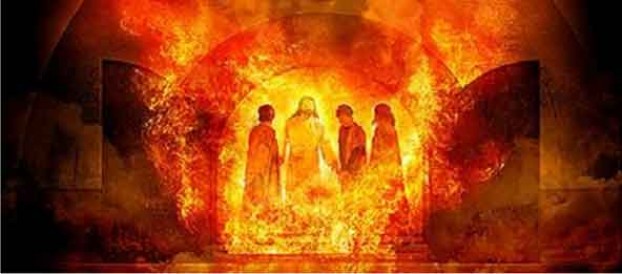
Daniel: The Fourth Man in the Fiery Furnace

Source: https://dwellingintheword.files.wordpress.com/2013/07/jer29-burning.jpg
Daniel 3:20-25
20 And he commanded the most mighty men that were in his army to bind Shadrach, Meshach, and Abednego, and to cast them into the burning fiery furnace. 
21 Then these men were bound in their coats, their hosen, and their hats, and their other garments, and were cast into the midst of the burning fiery furnace. 
22 Therefore because the king's commandment was urgent, and the furnace exceeding hot, the flame of the fire slew those men that took up Shadrach, Meshach, and Abednego. 
23 And these three men, Shadrach, Meshach, and Abednego, fell down bound into the midst of the burning fiery furnace. 
24 Then Nebuchadnezzar the king was astonied, and rose up in haste, and spake, and said unto his counselors, Did not we cast three men bound into the midst of the fire? They answered and said unto the king, True, O king. 
25 He answered and said, Lo, I see four men loose, walking in the midst of the fire, and they have no hurt; and the form of the fourth is like the Son of God."

The story of Hananiah, Mishael, and Azariah is a story that is often taught in Sunday Schools. These three young men were men of faith, trust, and hope. Each of them had a trust in God that stemmed directly from their names. Hananiah means "Yah is gracious," Mishael means "Who is what El is?," and Azariah means "Yah has helped." Why then do we never hear these names?

Because their names were changed. While these names hold significance in the Hebrew to mean names of the one true God, the names that were given to them--Shadrach, Meshach, and Abednego--hold significance with the Babylonian gods. It is entirely possible that the meaning of the Babylonian names given to these three men were merely the same names with Babylonian gods replacing Jehovah in the meaning. 

And yet, who saved these men?

It was Jehovah. Jesus Christ was walking around in the furnace with them. When they refused to obey the command of King Nebuchadnezzar to worship the golden image that he had set up of himself, they defied the names that had been given to them by the Babylonians and held to the heritage of their Hebrew upbringing.

Yahweh was gracious to them. He saved them when He didn't have to. These men were willing to go through the fiery furnace and die for what they believed.

When asked the question, "who is what El is?", they could honestly say no one. No man or god could measure up to what God did for them. While man tried to kill them, the one true God saved them.

Yahweh helped them. He walked through the fire with them. He released them from the bonds that tied them. When they emerged from the fire they didn't even smell like smoke!! 

These 3 men knew who they worshipped. They loved Him. And He was the fourth man walking through the fire with them.


Saturday, December 23, 2017

Ezekiel: The Glory of God

In the book of Ezekiel, the prophet references the glory of God on a constant basis. He sees the glory of God in different times and places. In fact, I would say that a theme of Ezekiel is the glory of God. And yet, in this book, we see the glory of God leave.

In Ezekiel 10, the prophet Ezekiel is seeing a vision of the temple. This vision is renewing a vision of God that Ezekiel had seen in chapter 1. But now, the Lord's glory is leaving. With the assistance of four cherubim, God's glory slowly moves out of the temple.

God had dwelt in the temple since the beginning of the structure. He had resided over the mercy seat in the tabernacle when Israel was wandering in the wilderness. He then moved His glory into the temple during the dedication ceremony that Solomon had after the temple's completion. His glory resided in this structure as long as He could. But now Jerusalem was going to be destroyed, and along with it, the temple. And God's glory had to leave.

He first moved from the inner part of the temple to the threshold of the temple. He then moved to where the four cherubim were. From there, He moved to the east gate and finally left completely by the Mount of Olives.

It was then that Jerusalem was destroyed and the inhabitants were taken into captivity. Eventually, when they came back, they rebuilt the temple and resumed worship. But God's glory did not return at that time. God's glory could have returned at one time in history though.

The glory of God came and lived on the earth. Jesus Christ came to the earth and lived a perfect life as the Messiah. But Israel rejected Him. They rejected the very glory of God on this earth. Had they blown it completely? Had they lost all hope of ever seeing God's glory among them again?


Praise God they have not. Ezekiel prophecies of this in chapter 43. In this chapter, Ezekiel sees a vision of God's glory coming back into the city of Jerusalem. But when will this happen? Well, God will come to earth again at the conclusion of the Tribulation period. At this coming, He will set His feet down on the same place where He ascended from in Acts and the same place where the glory of the Lord left the first time: the Mount of Olives. He will come back into the city the same way the glory of God left: through the east gate, to the threshold of the new temple and dwell in the sanctuary there for a thousand years!! There are so many other details that I don't have time to write about, but it is a truly fascinating study!! God's glory will one day dwell on the earth again!!


Saturday, November 25, 2017

Lamentations: The Weeping Prophet

When we look at Christ in the book of Lamentations, we don't need to look any further than the title. The entire book is full of the lamentations of the prophet Jeremiah, who was known as the weeping prophet back in the Old Testament. Why did this prophet get this title and how then can we see Christ in the same light? 

It was because of the sins and ultimately the destruction of Judah. They had become so wicked that God allowed them to be taken into captivity by the Babylonians. Jeremiah had so desperately wanted the people to return to God that seeing the city of Jerusalem in its destroyed state moved him to tears. From the very opening of the book, we see Jeremiah's tears: "How doth the city sit solitary, that was full of people!
how is she become as a widow! she that was great among the nations, and princess among the provinces, how is she become tributary! (Lamentations 1:1)" 

As you move through the book, you constantly see terms of sadness and hopelessness. Words like weep, mourn, and distress show the condition of the hearts of the righteous who still follow God. Words like desolate, solitary, cut off, and captivity show the condition of the country that has been left behind by the people who once followed God and of the people who now live far from home.

And through all of these lamentations, all of this hopelessness, all of this destruction, we can still see a picture of Jesus Christ. Jesus Christ is seen in the author, Jeremiah with the same name-- the weeping prophet.

Just as Jeremiah wept over the destruction of Jerusalem, Jesus also wept over Jerusalem. Luke 19:41-44 tells this story of Jesus. 
41 And when he was come near, he beheld the city, and wept over it, 
42 Saying, If thou hadst known, even thou, at least in this thy day, the things which belong unto thy peace! but now they are hid from thine eyes.
43 For the days shall come upon thee, that thine enemies shall cast a trench about thee, and compass thee round, and keep thee in on every side, 
44 And shall lay thee even with the ground, and thy children within thee; and they shall not leave in thee one stone upon another; because thou knewest not the time of thy visitation.

Just as Jerusalem was destroyed in the time of Jeremiah by Babylon, it would one day be destroyed by the Romans. And Jesus wept because of that! In another passage he pleaded with the citizens of Jerusalem, "O Jerusalem, Jerusalem, thou that killest the prophets, and stonest them which are sent unto thee, how often would I have gathered thy children together, even as a hen gathereth her chickens under her wings, and ye would not! (Matthew 23:37)" It broke His heart that His people would not follow Him.
And it still breaks His heart.

It breaks His heart when sinners reject the salvation that He died to secure. It breaks His heart when those who He has saved live like there has not been a sacrifice made for them. It breaks His heart to think that there are those who have not even heard His name once. 

Where does that leave us? Our hearts should break for what His heart breaks for. It's cliche, I know, but seeing sinners die and go to hell, seeing believers live in sin, and seeing people die without ever hearing the gospel should break out hearts. We must strive to emulate the heart of Christ and allow His burden to become ours.


Tuesday, November 21, 2017

Jeremiah: The Righteous Branch

Jeremiah 23:5 "Behold, the days come, saith the Lord, that I will raise unto David a righteous Branch, and a King shall reign and prosper, and shall execute judgment and justice in the earth."


In Jeremiah 23, Jeremiah begins this chapter by issuing a warning to those leaders of God's people who would destroy God's flock from within. These are men who have neglected God's calling to lead Israel specifically. He then prophesies that a remnant of God's people will be gathered together again. They will be ruled by one called here the "Righteous Branch." This branch is a symbol of Christ's Millennial Kingdom.

When Jesus comes again one day, He will establish a Kingdom on this earth. Where the image of the branch comes in is this: the branch is a new plant that has been cut out of the old one. It is a shoot or a sprout growing out of the ground. While it is based out of the same kingdom and the same family, it is a new line, a new king, a new worship.

It was prophesied that one of the last kings of Israel, Jeconiah or Coniah, would not have a ruler come from his line anymore. And if Jesus were the biological son of Joseph that would have disqualified him from ruling. But Jesus was born of the virgin Mary, who did not descend from this cursed line, yet was still by right in the ruling line through his stepfather Joseph. This is where the righteous branch- the sprout- comes from. Christ comes to the earth to rule and to reign, fully in the right of His kingdom but making it new.


This is a prophecy, along with the prophecy of the virgin birth, is a great prophecy for us as Christians to know. Some would use this prophecy to say that Jesus Christ is not fit to be king because His father comes from this cursed line. But because we know that He was not the biological son of Joseph, we know that He is not disqualified. These two prophecies further show how much we can trust God and His Word. It is imperative that we continue to develop our trust in Him that our faith may never waiver, and this righteous branch, this new kingdom out of the old kingdom, is a great example of God's sovereignty and His ability to accomplish His will through the terrible actions of others. Coniah was an evil king, again, to the point where God cursed His seed from ever being able to be on the throne. But God worked to where His Son still has the right to sit on David's throne without this curse being upon Him. Is not our God amazing! Is not our God good! Is not our God righteous!


Thursday, November 16, 2017

Isaiah: The Prince of Peace

Isaiah 9:6
6 For unto us a child is born, unto us a son is given: and the government shall be upon his shoulder: and his name shall be called Wonderful, Counsellor, The mighty God, The everlasting Father, The Prince of Peace.

One of the many Messianic prophecies that we find in the Old Testament, this is one of the few that lists names for Christ. All of the names here view Christ as a ruler. He is the wonderful counselor, bringing about righteous judgment on this earth and in heaven. He is the mighty God,  full of wisdom and strength as our virtuous ruler. He is the everlasting Father, continually acting in that role as Father for all who will come to Him in every generation.

And He is the Prince of Peace.

It is fitting that this verse is in Isaiah. Out of all the books in the Bible, only Leviticus mentions the word peace more, with most of the references there being toward peace offerings. Isaiah prophesied at a time when Israel was searching for peace, and that time has continued even until now. Isaiah, like many others, held to the belief that the reign of their Messiah would bring peace to this earth, rather than bringing war to defeat all of Israel's enemies.

One of my favorite verses that shows this desire and knowledge that God would bring peace to and for Israel and to all who love God is Isaiah 26:3. This passage is part of a song that Isaiah wrote for Judah. Here, he writes "Thou wilt keep him in perfect peace, whose mind is stayed on Thee: because he trusteth in Thee." The words perfect peace there in the original Hebrew are actually the same word repeated twice: shalom shalom.

The word shalom in Hebrew is often and rightly interpreted as peace. It is the only word that we have that comes close to the application that the Hebrew language brings. While we view peace as calm, comfort, or tranquility, Hebrew shalom goes deeper. Shalom is a sense of completeness or wholeness that gives one the desire to give back. And Isaiah says that God will give a double portion of completeness to those people who keep their mind focused on Him.


One day Christ will come again and truly bring shalom shalom to the earth. Until then, let us keep our minds focused on Him, that He might bring us His shalom, His completeness to Him. And when He brings it to us, let us give our lives back to Him in reverence and in service.


Sunday, September 17, 2017

Song of Solomon: Our Loving Bridegroom

The forbidden book. Intimacy 101. So many names given to the book of Song of Solomon intended to "help" us avoid it, yet we often forget that it was put into the Bible for a reason. God had a purpose in including Solomon's "Song of Songs," as it is sometimes titled, in the Biblical canon. So where can we find Him and His Son here? As the loving bridegroom. 

Song of Solomon is really a collection of songs and choruses strung together, talking mostly about love, romance, marriage, and other "mushy" things. But it is truly beautiful in its language. Song of Solomon 6:3 says, "I am my beloved's, and my beloved is mine:" While this reference is between Solomon and the Shulamite woman, it can go so much deeper than that.

The Bible often refers to the marriage relationship as a parallel between Christ and the church. Paul admonishes husbands to love their wives just like "Christ also loved the church, and gave himself for it;" The book of Revelation refers to a coming banquet with the church and Jesus as the marriage supper of the Lamb. But perhaps no story of a bridegroom is more poignant than the parable told by the heavenly Bridegroom Himself in Matthew 25.

1 Then shall the kingdom of heaven be likened unto ten virgins, which took their lamps, and went forth to meet the bridegroom.
2 And five of them were wise, and five were foolish.
3 They that were foolish took their lamps, and took no oil with them:
4 But the wise took oil in their vessels with their lamps.
5 While the bridegroom tarried, they all slumbered and slept.
6 And at midnight there was a cry made, Behold, the bridegroom cometh; go ye out to meet him.
7 Then all those virgins arose, and trimmed their lamps.
8 And the foolish said unto the wise, Give us of your oil; for our lamps are gone out.
9 But the wise answered, saying, Not so; lest there be not enough for us and you: but go ye rather to them that sell, and buy for yourselves.
10 And while they went to buy, the bridegroom came; and they that were ready went in with him to the marriage: and the door was shut.
11 Afterward came also the other virgins, saying, Lord, Lord, open to us.
12 But he answered and said, Verily I say unto you, I know you not.
13 Watch therefore, for ye know neither the day nor the hour wherein the Son of man cometh.

When Jesus told this parable, He was in the middle of the Olivet Discourse. In this discourse, He is describing the events to come in the future. He compared His coming to the coming of the bridegroom to a wedding, where He is preparing to meet His bride. At the site, there are 10 virgins, attendants for the bridegroom and the bride as He prepares. Here, 5 are ready to meet the bridegroom with their candles full of wax and 5 are not. As the 5 wise who have prepared meet the bridegroom, the 5 foolish desperately try to prepare themselves after the announcement of the bridegroom.

But it is too late.

These 5 who professed to be attendants of the bridegroom and carriers of light for Him are not prepared for when He comes. They have no light in their candles to show Him or to help keep light while they attend to Him. He wants them at the marriage supper, but because they were not prepared, He is not able to have them there. 

Let's think about what's happening here: this bridegroom is about to marry his bride, his love. He wants her to have as many people there as possible. He wants to be able to say, you are welcome to the wedding. But when these are not prepared, they are not able to come. This is a call to all of us in the church to be prepared. Verse 13 there says, "Watch therefore, for ye know neither the day nor the hour wherein the Son of man cometh." The bridegroom is coming. Will we be ready to meet Him?


Sunday, September 10, 2017

Proverbs and Ecclesiastes: Our Wisdom

Proverbs 2:6

6 For the Lord giveth wisdom: out of his mouth cometh knowledge and understanding.

When one thinks about wisdom in the Bible, his mind almost automatically goes to the book of Proverbs. The author of most of this book, as well as Ecclesiastes, Solomon, is known as the wisest man who ever lived. And while this fact is true, there is only one reason why Solomon was able to be this great wise man: God gave him that wisdom.

If you know the story, Solomon had taken over the throne from his father, David. He was now preparing to lead the great nation of Israel. He was very nervous and overwhelmed with the great task that stood before him. But God appeared to him in a dream. God asked Solomon what the young king wanted. Whatever Solomon asked for, God would give it to him. Solomon came, by his own admission, as a little child. He wasn't ready to lead a country! So he asked God for a wise and understanding heart. Because he asked for this good thing, God promised him so much more, including that none would ever have arisen or would ever rise who would be wiser than Solomon.

God was the source of Solomon's wisdom. We credit Solomon with so many great sayings, such as:

"5 Trust in the Lord with all thine heart; and lean not unto thine own understanding. 6 In all thy ways acknowledge him, and he shall direct thy paths (PROV. 3:5-6)."
"13 Let us hear the conclusion of the whole matter: Fear God, and keep his commandments: for this is the whole duty of man (ECC. 12:13)."

Solomon was so wise, yet even he, with all of his intellect, with all of his wisdom, with his great understanding heart, was nothing without God. When we look at these two books, it is like apples and oranges- two completely different men, yet it's the same author. The words of Solomon in Proverbs come from the heart of a man who is wise in the things of God. Yet the words of Solomon in Ecclesiastes come from the mind and the heart of a man who has been wise in the things of the world.

So what happened? Why did Solomon, who had gained his great wisdom from God, turn away from that wisdom- turn away from that God? Well, Solomon disobeyed his own words in Proverbs 3:5-6. He didn't trust in the Lord anymore. Rather, he relied on his own understanding. He married foreign women, some with countries that could have tried to wipe out Israel. And while marrying the daughter of the ruler of his largest neighbors to form an alliance may be smart or wise in man's eyes, in God's eyes, it was downright wrong! He had commanded the Israelites not to inner-marry with foreigners. He knew that these women would turn the hearts of Israel away from God. And that is exactly what they did to Solomon. He took his eyes and trust off of the one who gave him wisdom, and trusted in his own understanding.


This is why Solomon came to the end of his life and wrote, "2 Vanity of vanities, saith the Preacher, vanity of vanities; all is vanity." That word vanity there means emptiness or unfulfilling. Solomon used that word in 29 different verses. Several times he used it multiple times in the same verse! He had lived through the world's wisdom and came to the realization that life without God is empty, it's unfulfilling, it's pointless! In Ecclesiastes 2:26, Solomon writes, "For God giveth to a man that is good in his sight wisdom, and knowledge, and joy: but to the sinner he giveth travail, to gather and to heap up, that he may give to him that is good before God." You see God is the only one who gives good wisdom. And because God is wise in all matters, because God is all-knowing, we as Christians can know that he is wisdom. And when we trust in Him, we can know that he is our wisdom!


Sunday, September 3, 2017

Psalms: Our Shepherd


Psalm 23

1 The Lord is my shepherd; I shall not want.
2 He maketh me to lie down in green pastures: he leadeth me beside the still waters.
3 He restoreth my soul: he leadeth me in the paths of righteousness for his name's sake.
4 Yea, though I walk through the valley of the shadow of death, I will fear no evil: for thou art with me; thy rod and thy staff they comfort me.
5 Thou preparest a table before me in the presence of mine enemies: thou anointest my head with oil; my cup runneth over.
6 Surely goodness and mercy shall follow me all the days of my life: and I will dwell in the house of the Lord for ever.

In the book of Psalms, there are two passages where the Lord is referred to as a shepherd. Psalm 23 is the most common one. If one has any semblance of a Christian education, he is taught the 23rd Psalm. Many Christians and Catholics alike have committed it to memory. Psalm 80 is a much lesser known Psalm. 

1 Give ear, O Shepherd of Israel, thou that leadest Joseph like a flock; thou that dwellest between the cherubims, shine forth.
2 Before Ephraim and Benjamin and Manasseh stir up thy strength, and come and save us.
3 Turn us again, O God, and cause thy face to shine; and we shall be saved.
4 O Lord God of hosts, how long wilt thou be angry against the prayer of thy people?
5 Thou feedest them with the bread of tears; and givest them tears to drink in great measure.

In these passages, both David and Asaph speak to God from the perspective of sheep calling out to a shepherd or sheep being led by a shepherd. They so desperately want to see God take their own lives and the lives of their people and lead them through life. Through previous pictures, we have seen God lead as king and judge, but how does he lead as the shepherd?

First, a shepherd leads gently. In verse 2 of Psalm 23, David says that God leads to green pastures and beside still waters. These green pastures are not rough like the mountains of Israel, but rather they are the fields that surround the homes of the people. And while sometimes the mountains come, when we have passed through those mountains, there is green grass for us to lay down in- gently. The same applies to the waters. The waters that God leads us by are not rushing rivers that would scare us away so that we cannot drink. Rather these waters are calm streams, creeks, lakes, and ponds. The water is still. The water is peaceful. It provides us with a sense of comfort that we would otherwise not experience without the gentle hand of God leading us.

Secondly, a shepherd leads while guarding. Psalm 23:4 talks about the valley of the shadow of death. But, David says, even though we pass through this dreadful valley, we don't need to fear because the Shepherd is right there leading us with His rod and with His staff. The rod was typically a shorter piece of wood and was quite thick at times. The rod's purpose was striking. David very well may have used the rod when he struck the animals who would have tried to kill his sheep. It could have been used as either an offensive or defensive weapon against enemies. The staff had a completely different purpose than the rod. The staff is the stick that we often picture shepherds with. A long pole with a large hook on the end. Its purpose was to corral the sheep and to keep them away from the edge of a cliff or a thorn bush. With the hook, the shepherd could easily grab one of his sheep while keeping a safe distance away from the danger himself. This was used against traps. Both are effective in guarding the sheep against any dangers that they may face. 

Finally, a shepherd leads while giving. When one comes to the end of Psalm 23, he encounters two verses that spread out four gifts from the shepherd: the set table, the anointing of oil, the full cup, and the eternal home. The set table is just what it sounds like- it is the food that we enjoy. Not only are we enjoying it, we are enjoying it in the presence of our enemies. His guarding that we saw in the previous verse now allows Him to provide for our needs. This table is not necessarily overly-abundant at this time. But it is a table that fulfills our need.

The anointing of oil was a sign of respect whenever one entered another's home. This gift was designed to show love and acceptance as long as the person was in the home. And daily, we can approach God and be accepted as anointed believers.

The running over of the cup was another custom when one would be a guest in someone's home. A family would give their guest a cup and be careful to make sure that they filled it to the point where it overflowed. This symbolized that as long as the guest was in their home, they would have plenty- abundance.  In the same way, God not only provides for our daily needs, but he also provides us with abundant blessings when we follow His leadership.

The final gift of Psalm 23 is the eternal home. Just like we may have stray dogs and cats today, at some points there would be stray sheep in Bible times. They wouldn't have a fold to call home or a shepherd's voice to follow. But this is where we connect the words of Jesus to the words of the Psalmist. When Jesus spoke of Himself as the Good Shepherd, or as the Door of the fold, He spoke of this leadership and of the welcoming into the fold that each of his sheep receives. It doesn't matter where they've come from or what they have seen, they can be welcomed into the fold of God and find a forever home. And today, if you have not done so already, you can be welcomed into the fold of God.


Sunday, August 30, 2015

Job: Our Ever-Living Redeemer

Job 19:23-27

23 Oh that my words were now written! oh that they were printed in a book!

24 That they were graven with an iron pen and lead in the rock for ever!
25 For I know that my redeemer liveth, and that he shall stand at the latter day upon the earth:
26 And though after my skin worms destroy this body, yet in my flesh shall I see God:
27 Whom I shall see for myself, and mine eyes shall behold, and not another; though my reins be consumed within me.

In Exodus and Leviticus, we looked at Christ as our Passover Lamb and our Sacrifice. But that is not the part of the story that excites me most. That part is His resurrection on the third day, what we now call Easter Sunday! Matthew 28, Mark 16, Luke 24, and John 20 cover the story of Jesus' resurrection in great detail. But while I do love that story, today I want to look at Jesus as the first and the last, the alpha and omega, the beginning and the end.


When Job spoke verses 25 and 26, He was doing much more than just stating his faith in his Redeemer. Rather, he was speaking prophetically. Because God is still living, Job has a hope. We today have the same hope, that one day, we will live together with God in Heaven. Scripture is filled with verses from people who have faith in this hope. 

Psalms 17:15
As for me, I will behold thy face in righteousness: I shall be satisfied, when I awake, with thy likeness. 

I Corinthians 13:12 
For now we see through a glass, darkly; but then face to face: now I know in part; but then shall I know even as also I am known.

John 14:1-4
Let not your heart be troubled: ye believe in God, believe also in me. In my Father's house are many mansions: if it were not so, I would have told you. I go to prepare a place for you. And if I go and prepare a place for you, I will come again, and receive you unto myself; that where I am, there ye may be also. And whither I go ye know, and the way ye know.

I John 3:2
Beloved, now are we the sons of God, and it doth not yet appear what we shall be: but we know that, when he shall appear, we shall be like him; for we shall see him as he is.

David, Paul, and John all say that they, and we who are Christians, will see God. Jesus Christ even promised us this. But this hope is not only that we will see God, it is that we will be like Him. When Jesus rose from the dead, He appeared to His followers in His glorified body. And one day we will have this body, a body like John described in Revelation 21:4- "And God shall wipe away all tears from their eyes; and there shall be no more death, neither sorrow, nor crying, neither shall there be any more pain: for the former things are passed away."


Sunday, August 23, 2015

Esther: Our Intercessor

Esther 4:15-16

15 Then Esther bade them return Mordecai this answer,

16 Go, gather together all the Jews that are present in Shushan, and fast ye for me, and neither eat nor drink three days, night or day: I also and my maidens will fast likewise; and so will I go in unto the king, which is not according to the law: and if I perish, I perish.

Esther is one of the most dramatic stories in the Bible. It starts off with the queen of Persia being banished. This leads to a beauty contest and through one of God's divine plot twists, a poor Hebrew orphan raised by her cousin becomes queen of the most powerful empire on the planet at the time. Her cousin works in the palace of the king as a guard and is hated by the man who is visier, second to only the king. Because of this, the visier decides to kill all of this man's family. He doesn't know that the queen is a relative of this man. And that is where we pick up the story and I see a picture of Jesus.

Mordecai, the palace guard, is seen crying by his cousin Esther's maids. After a back and forth with their messengers Mordecai tells Esther to go to King Ahasueres. Esther saw that God had sent her as the intercessor for her people. Just as Esther was placed in the palace as the intercessor for Israel, Jesus was sent to earth as the intercessor for us. There are two similarities between Esther and Jesus as they intercede for those they love. 

First, both were willing to lay down their lives. Esther said in Esther 4:16, "... and so will I go in unto the king, which is not according to the law: and if I perish, I perish." By going before the king uninvited, she could have been put to death. Jesus DID lay down His life for us.

Secondly, they both went before a king to intercede for their people. Esther went before King Ahasueres and asked him and Haman to come to dinner. At that dinner, she asked them to come to another dinner. Finally, at their third meeting, she laid her request before the king, for her life and for the lives of her people. Jesus Christ goes before God, the ultimate King, to make intercession for us. Romans 8:34 says, "Who is he that condemneth? It is Christ that died, yea rather, that is risen again, who is even at the right hand of God, who also maketh intercession for us."

Now ultimately, this study on Christ is to show us who we are to be. Paul writes to Timothy in I Timothy 2:1, "I exhort therefore, that, first of all, supplications, prayers, intercessions, and giving of thanks, be made for all men;" We are called by God to intercede for one another. James 5:16 says, "Confess your faults one to another, and pray one for another, that ye may be healed. The effectual fervent prayer of a righteous man availeth much." The Bible is full of prayer, and this prayer of intercession is one of the most important prayers that we can pray.


Sunday, August 16, 2015

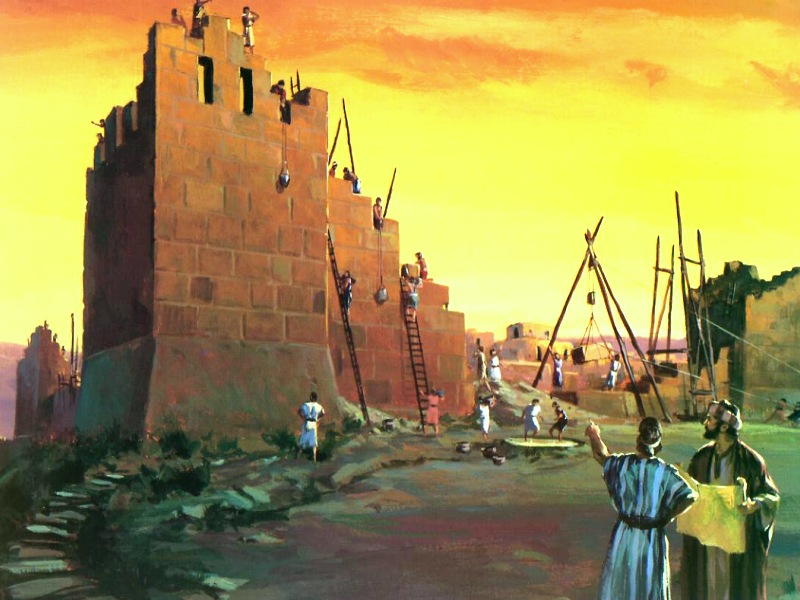
Ezra and Nehemiah: The Rebuilder of the Broken Down Walls of Our Lives.

Photo Source: http://abidanshahdotcom.files.wordpress.com/2013/03/nehemiah-rebuilding-walls.jpg


Ezra 1:1-4
1 Now in the first year of Cyrus king of Persia, that the word of the Lord by the mouth of Jeremiah might be fulfilled, the Lord stirred up the spirit of Cyrus king of Persia, that he made a proclamation throughout all his kingdom, and put it also in writing, saying,
2 Thus saith Cyrus king of Persia, The Lord God of heaven hath given me all the kingdoms of the earth; and he hath charged me to build him an house at Jerusalem, which is in Judah.
3 Who is there among you of all his people? his God be with him, and let him go up to Jerusalem, which is in Judah, and build the house of the Lord God of Israel, (he is the God,) which is in Jerusalem.
4 And whosoever remaineth in any place where he sojourneth, let the men of his place help him with silver, and with gold, and with goods, and with beasts, beside the freewill offering for the house of God that is in Jerusalem.

Nehemiah 2:1-6
1 And it came to pass in the month Nisan, in the twentieth year of Artaxerxes the king, that wine was before him: and I took up the wine, and gave it unto the king. Now I had not been beforetime sad in his presence.
2 Wherefore the king said unto me, Why is thy countenance sad, seeing thou art not sick? this is nothing else but sorrow of heart. Then I was very sore afraid,
3 And said unto the king, Let the king live for ever: why should not my countenance be sad, when the city, the place of my fathers' sepulchres, lieth waste, and the gates thereof are consumed with fire?
4 Then the king said unto me, For what dost thou make request? So I prayed to the God of heaven.
5 And I said unto the king, If it please the king, and if thy servant have found favour in thy sight, that thou wouldest send me unto Judah, unto the city of my fathers' sepulchres, that I may build it.
6 And the king said unto me, (the queen also sitting by him,) For how long shall thy journey be? and when wilt thou return? So it pleased the king to send me; and I set him a time.

The people of Israel were granted permission by the king of Persia, Cyrus to rebuild the temple in the book of Ezra. But while they were rebuilding the temple and living in tents, they had no protection from outside invaders. So God called Nehemiah to lead the effort to rebuild the walls of Jerusalem. Nehemiah and the people of Israel worked tirelessly to get the walls built. They did face opposition, however. The people of the land, led by Sanballat and Tobiah, tried to stop Israel from rebuilding the capital city of the once powerful nation. But Nehemiah was not fazed at all. In Nehemiah chapter 2:20, he told those who opposed Israel, "The God of heaven, He will prosper us; therefore we His servants will arise and build: but ye have no portion, nor right, nor memorial in Jerusalem." It looked like Israel was not going to get this wall done at all at one point. But with God's help, they built an enormous wall, one that surrounded the entire city of Jerusalem, in just 52 days! Nehemiah 6:15-16 says, "So the wall was finished in the twenty and fifth day of the month Elul, in fifty and two days. And it came to pass, that when all our enemies heard thereof, and all the heathen that were about us saw these things, they were much cast down in their own eyes: for they perceived that this work was wrought of our God."

I see Jesus and we who have been saved symbolically throughout both of these books. When the people of Israel were taken in captivity, their home and the walls surrounding it were destroyed. When Adam and Eve sinned, our "home" of fellowship with God that was surrounded by the walls of his protection was destroyed. And yet, God was merciful and sent someone who could help us rebuild the walls and restore our relationship with Him. And Jesus can do what may seem impossible: change the lives of sinners and build a relationship as strong as the walls of Jerusalem were when they were completed. And when He is building that fellowship, Satan gets angry. He tries many things to get us to stop following Christ. Several of these things that Satan uses were also used by the occupants of Canaan against Israel. 

One device that is used is ridicule. In Nehemiah 4:1, Sanballat hears that the wall is being built. And when he does, he begins to openly mock the children of Israel. His companion Tobiah does likewise. And through all of this, the people prayed to God to help them. When we are ridiculed, we must do the same. We must turn to God in prayer.

A second device that is used is the threat of attack. Now the attacks used then and now may be different. In those days, Israel was threatened by and army. In some countries today this is the case. But in our America, many of the threats are merely peer pressure. The people of Israel set watchmen to warn of any attacks that could come their way. In our lives, we must watch out for any attacks of Satan, whether they be peer pressure, or some other form of temptation that he may throw our way. 

A third and final device used by Satan and the Canaanites is that of discouragement. Life may not seem to be going our way. It certainly was not working out for Israel at that time. But they had a reliance on God that was further strengthened through the trials that they had already faced. It is times like our trials that we can learn to rely on God and not become discouraged. It is when this happens that we can grow as Christians and change the world.

Nehemiah, Ezra, and the children of Israel rebuilt the city walls within 52 days. God is working to rebuild our lives throughout our lifetime. It is our job to build it up through prayer and the reading of the Bible as He works in us.

Next Sunday we will be looking at Christ in the book of Esther as our Advocate. Until next time, God bless!


Sunday, August 9, 2015

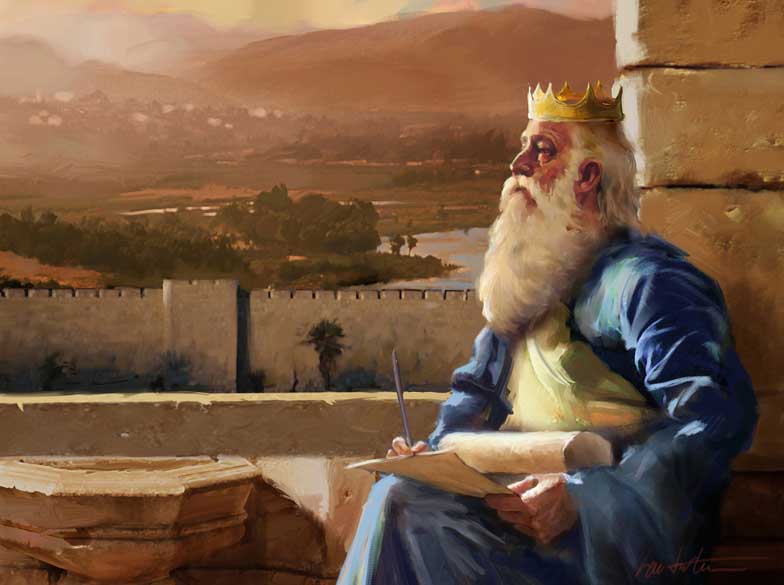
Kings and Chronicles: Our Reigning King

Photo Source: http://www.crystalinks.com/kingsolomonwrite.jpg


Tonight's study is fairly straightforward, so I don't plan to spend to much time discussing it. The Bible is full of stories about kings: kings in the land of Canaan, Egypt, Israel, Babylon, Persia, Rome, and more. But it is the king who has reigned on the throne of Heaven since time began who the Bible obviously devotes much of its text to. 

In the Old Testament, it was prophesied that Jesus would be king. Isaiah 9:6 says, "For unto us a child is born, unto us a son is given: and the government shall be upon his shoulder: and his name shall be called Wonderful, Counsellor, The mighty God, The everlasting Father, The Prince of Peace. Of the increase of his government and peace there shall be no end, upon the throne of David, and upon his kingdom, to order it, and to establish it with judgment and with justice from henceforth even for ever. The zeal of the Lord of hosts will perform this."

The Gospels speak several times about Christ as king. When the angel Gabriel came to Mary in Luke chapter one, he said these words: "He shall be great, and shall be called the Son of the Highest: and the Lord God shall give unto him the throne of his father David: And he shall reign over the house of Jacob for ever; and of his kingdom there shall be no end (vv. 32-33)." When the wise men from the east came searching for Jesus they said, "Where is he that is born King of the Jews? for we have seen his star in the east, and are come to worship him (Matthew 2:2)." In Matthew 27, the Roman governor Pilate was questioning Jesus and said, "Art thou the King of the Jews?" Jesus answered this by simply saying, "Thou sayest." And finally, when Jesus was lifted up on the cross to die, the Romans mocked Jesus by putting a sign over His head in several languages that said, "This Is Jesus The King Of The Jews."

Like we saw when people called Jesus a prophet, He did not deny what they were saying. Jesus knew who He was and is and also what He had come to do. You may be wondering what all of this has to do with the books of Kings and Chronicles. Well, I have tried to look at different characters in the books and see where Christ fits in. Kings and Chronicles give us the records of the kings of Israel and Judah from the end of David's reign, through the Divided Kingdom, and all the way to the destruction of Jerusalem by Nebuchadnezzar. What do all kings have in common? They reign over a kingdom. All of the kings we see in these books had their kingdoms come to an end. Each of them died and passed the kingdom on to their sons until they were eventually destroyed. But Jesus is not like any other king. Just like Gabriel said to Mary, "of His kingdom there shall be no end."

Stay tuned throughout the week for updates. Next Sunday we will look at Jesus Christ in the books of Ezra and Nehemiah as the Rebuilder of the Broken Down Walls of Our Lives.


Sunday, July 26, 2015

I & II Samuel- Our Trusted Prophet

Photo Source: http://agapegeek.files.wordpress.com/2011/05/prophet1.jpg


For this study, we will not be so much looking at a specific scriptural passage, or even at characters in the books themselves (like Samuel and Nathan, who were trusted as prophets and spiritual leaders in the lives of the children of Israel). But rather we will be looking at the attributes that made these men trusted as prophets. Each of these fulfilled the characteristics of a true prophet, which were set by God in the Bible. 

1. A true prophet does not lie. His prediction will be fulfilled (Jeremiah 28:9).
2. A true prophet prophesies in the name of the Lord, not in his own name (II Peter 1:21).
3. A true prophet does not give his own private interpretation of prophecy (II Peter 1:20).
4. A true prophet points out the sins of the people against God (Isaiah 58:1).
5. A true prophet warns the people of God’s coming judgment (Jonah 3:4, Zephaniah 1:1-3).
6. A true prophet edifies the church, counsels, and advises it in religious matters (I Corinthians 14:3-4).
7. A true prophet’s words will be in absolute harmony with the words of the prophets that have preceded him (Isaiah 8:20). 
8. A true prophet recognizes the incarnation of Jesus Christ (I John 4:1-3).
9. A true prophet can be recognized by the results, or fruit, of his work (Matthew 7:16-20).
10. A true prophet acts in accordance with the will and approval of God (Deuteronomy 18:19). 
(http://www.bibleplus.org/prophecy/visions-egw/tests_of_a_true_prophet.htm)

Jesus was referred to as a prophet and He even referred to Himself as a prophet during His ministry.

Luke 4:24- And he [Jesus] said, “Verily I say unto you, No prophet is accepted in his own country.”
John 7:40- Many of the people therefore, when they heard this saying, said, “Of a truth this is the Prophet.”

So did Jesus really fulfill the office of a prophet? Let’s look at the tests that God has set forth:

1. What He prophesied has been fulfilled to this point (e.g. Matthew 17:22-23, John 11:4, 43-44).
2. Jesus spoke what the Father told Him to say (John 12:49).
3. Jesus fulfilled the prophecies literally, rather than explaining them away(Psalm 78:2, Matthew 13:35).
4. Jesus knew the sins of the people and told them when they were doing wrong (John 4:16-19).
5. Jesus foretold the coming judgment which we are still looking for (Matthew 25).
6. Jesus gave a sermon which edified, counseled, and advised people in all religious matters (Matthew 5-7).
7. Jesus often quoted from the Old Testament prophets, many times in relation to prophecies that He either fulfilled or would fulfill (Matthew 10:35, Mark 7:6-7, Luke 7:24-28, John 12:12-15).
8. Jesus, obviously, knew that He was God (Luke 22:67-71).
9. The result, or fruit, of Jesus’ work was, ultimately, His death on the cross and His resurrection (Luke 23:26-24:43)
10. Jesus could do nothing by himself, but rather, the will of His Father (John 5:30).

As we can see, Jesus fulfilled the characteristics of a true prophet. He still has some prophesies that are unfulfilled, however, so each of us must continue to “Watch therefore: for ye know not what hour your Lord doth come (Matthew 24:42).”

Next time we will look at Christ in Kings and Chronicles as our Reigning King. Until then, go make a difference in the world by making Christ known to someone who does not know Him. God bless!!